Tuesday, 17 May 2016

20 FREE copies of new e-book to giveaway!

With the launch of my new Agatha Christie Book Club—Murder on the Orient (SS)—I'm giving my devoted blog readers a chance to win one of 20 free copies of the e-book!

Image result for agatha Christie images

That's right, baby, TWENTY!!

All you have to do—and it's uber easy—is jot down the name of your favourite Agatha Christie Book. I mean, really? Could it be an easier?

Do you adore Murder on the Orient Express, as I do? Is Evil Under the Sun a smarter choice? What about something more cryptic like The ABC Murders or Peril at End House?

Image result for agatha Christie booksDame Christie wrote around 82 detective novels, so you've got plenty of books to choose from.

Just jot the title in the comment box below or, if you'd like more privacy, via a direct email to me, and I'll get back to you if you're one of the first 20: christina.larmer@gmail.com

That's right—there is no right or wrong answer. Just get in quick!

I promise NOT to use your name and email for any other purpose so please don't worry about that. I just want to share my story with other Christie fanatics, and I want to do it fast.

So, let's recap…

Six Steps to Success

Step 1: Stop screaming at this wondrous opportunity and get a grip!
Step 2: Think about all of the Dame's many fantastic whodunnits and decide which one takes the cake. Can't recall them all? Try: the Agatha Christie website or Wikipedia.
Step 3: Write down the name of that chosen book in the comment box below, or via email to me.
Step 4: Sit back, take a breath and wait to hear if you're the lucky winner. (Gasp.)
Step 5: If you ARE the lucky winner, just let me know which format you prefer (for Kindle, iPad etc) and wait for it to be emailed directly to you.
Step 6: Download the book then sit back, take a breath, and enjoy the read :-)

Good luck everyone and thanks, once again, for all your support! I couldn't have done it without you.

xo Christina

Thursday, 12 May 2016

This Black Friday the real SS Orient is back from the dead!

Today I'm donning my finest boat shoes and popping on the captain's hat for the official launch of the Agatha Christie Book Club 2—Murder on the Orient (SS). But don't worry! 

I'm not going to bore you senseless with a sales pitch here—check out your preferred e-retailer for that. Instead I'm going to remind you where I got the idea from and how true synchronicity works, courtesy of my Author's Note from the book (see below). 

I think the backstory is almost as fascinating as my novel. Damn, there I go with the sales pitch…

S.S Orient (5,390 tons),  Orient liner which made its maiden voyage to
                     Australia in 1879. From a lithograph after T.G. Dutton at the National
                     Maritime Museum, Greenwich, U.K. (PAH5285) 

Murder on the Orient (SS): A Note from the Author


"When I started conjuring up the second adventure for the Agatha Christie Book Club I wanted to take them on an exotic journey à la the infamous Orient Express, one of my favourite Poirot settings, and began looking around for ideas.

Boy, did I get lucky!
Worsley, William. The S.S. Orient galop [music] - Front Cover

In the early 1900s, there really was a classic steamship called the SS Orient that sailed between London and Sydney, via the Suez Canal and The Cape. According to my research, it was a gleaming ship, full of glamorous characters and several rather dubious deaths, and proved a perfect fit for my book club friends. While I have changed some details, including the original itinerary, for the sake of this contemporary plot, much of the information about the ship is authentic and can be found in the bibliography.

Sadly, however, the SS Orient has not been recommissioned nor is there a real-life replica floating about as I have imagined here, but an author can dream can’t she?

And a book club can jump aboard for the ride…
Bon voyage!"

For more info on the (real) SS Orient 
 
The SS Orient Story by Roy Clifford and Dave Knight


Happy reading, everyone, and I hope you enjoy the voyage.
xo Christina

Sunday, 8 May 2016

FIVE free copies of Agatha Christie Book Club up for grabs


I've got a touch of the Excitements and it's getting infectious! Just four sleeps to go until the official launch of my second Agatha Christie Book ClubMurder on the Orient (SS), which is now available for pre-order at Amazon and Smashwords.

The book will be on sale from Friday, May 13.

To celebrate, I prescribe a good dose of Book 1—The Agatha Christie Book Club (original cover pictured below).

If you haven't already read it, or you'd like a copy of the paperback version, then here's your chance.

I'm giving away FIVE free copies at Goodreads.

***The competition opens Monday, May 9 and closes June 9 and all Goodreads subscribers are welcome to enter. ***


If you haven't already, this is your chance to catch the Agatha Christie Book Club bug.

If you're not a member of Goodreads but you'd also like a chance to win a free copy of the first book, get in touch here and I will set up a separate competition just for you. But you do need to contact me ASAP.

Until then, good luck and happy (feverish) reading everyone!

xo Christina

Sunday, 1 May 2016

The true story behind the real SS Orient


“The SS Orient, kiddoes! It’s a sign from Dame Christie herself!”
Missy Corner, Murder on the Orient (SS)

At last, here it is... 

If you enjoyed the first book or are just looking for a classic whodunnit, the Agatha Christie Book Club is back, this time on a nautical adventure called Murder on the Orient (SS), now available for pre-order at Amazon.

Murder on the Orient (SS) follows our beloved book lovers as they embark on a "quiet cruise" (cough, cough) between Sydney, Australia and Auckland in New Zealand.

Naturally, the first dead body shows up within 24 hours, but it's not really until a second body goes missing—this time with a loud squeal and an ominous splash overboard in the dead of night—that the club decides to pull on their Poirot mo' and investigate.

Based on a real ship

Like all my mysteries, this one was a lot of fun to write, but it was even more fun to research. Anyone who knows me, knows I love to sink my teeth into crusty old documents, dusty old reference books, and pages and pages of web material to get at the truth.

I'm a research junkie with no desire to kick the habit.

And this book was research (Acapulco) gold. The SS Orient really does exist. Or it did, back in 1879 when it was first built. And while the steamship only sailed a mere 30 years or so, mostly between London and "the colonies", it was also literary gold as far as I was concerned.

I quickly created a modern-day replica of the SS Orient and lured my book club aboard.

Not only does the ship have the perfect name—“The SS Orient, kiddoes! It’s a sign from Dame Christie herself!”—it was the ideal setting for an old-fashioned style whodunnit, the kind of ship Dame Christie (Miss Marple or Poirot) might have voyaged on had the opportunity come up.

It's elegantly designed and decorated and has few mod cons like CCTV and WiFi to get in the way of a good story. After all, there's no chance of sneaking into someone's cabin to bump them off on the Pacific Princess what with all those pesky cameras catching your every move.

Based on a favourite story

Now that I had the setting I just needed a great plot and I may—or may not—have borrowed from the Queen of Crime. I wanted there to be echoes of the original Murder on the Orient Express without being a carbon copy. Some elements are similar, some are wildly different, and Agatha Christie aficionados will enjoy a little trainspotting as the story progresses.

Just don't expect it to be handed to you on a silver platter. Like Christie's books, I provide a stack of clues and some fishy red herrings to keep you guessing right until the 'great reveal' at the end.

Or at least that's the plan.

I'd love to hear your thoughts once you've read the book. For now, jot me a line and let me know what you think of the cover, the setting and the basic premise of the story. Or simply sign up for your early copy at Amazon here.

Murder on the Orient (SS) will be officially launched on Friday, May 13. Yep, that's black Friday.

Unlucky for some.

If you haven't read the first in the series, The Agatha Christie Book Club, grab a copy now or look out for future discounts. There'll be plenty of those.

Until then, happy (retro) reading, everyone!
xo Christina


Monday, 25 April 2016

Why I redesign my covers…

I could wax lyrical on current trends in online readership and design strategies behind market domination but the truth is, the reason I changed the cover of my stand-alone adult novel
 An Island Lost is as simple as this:

It's both good fun and a vital part of the creative process!

I love designing covers. It's a pet joy of mine. I love playing with images and fonts, colours and embellishments to create the most visually appealing book I can. Not just visually appealing, but visually relevant.

Because I like my covers to reveal the essence of my book. 


Now that may seem like a no-brainer to you, but I am often disappointed by a book that promises one thing with its cover and delivers something entirely different with its content. You think, soft and dreamy and it turns out to be hard and dreary. Or vice versa.

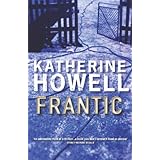
Product DetailsAnd don't get me started on all the dreadfully dull crime fiction that is published by traditional publishers. It is as though they have said, 'Let's try to say as little as possible with this cover.' By trying to be all things to all readers, they end up with a cover that is boring, banal and blah!
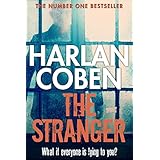
Product Details
Aussie paramedic-turned-author Katherine Howell tops that list of offenders and, sorry Harlan Coben, but you're up there, too. I love both authors' words, but their covers don't tell me a thing.

An Island Lost, an evolving tale...


I am known for changing my covers, it's true, but this particular book has seen several manifestations in its four years of publication.

I started with a slightly ominous, more masculine design in the early days which was done by a graphic designer by the name of Stuart Eadie. He did a great job, but I soon grew disappointed. It seemed too blokey to me and didn't really get the story across. It also seemed to alienate so many of my core readers—women.

So last year I did an about-face and redesigned the cover myself, this time with a very feminine look. I loved that cover, still do, but gradually have begun to wonder if it's a little too girlie. It looks like ChickLit and it's absolutly not that!

Back to the drawing board…


Recently, while pouring over images for my new Agatha Christie Book Club (cover reveal to come soon!), I found a photo that seemed perfect for An Island Lost—which is the story of a woman's journey back to her homeland, Papua New Guinea. The image is both fun and invigorating, and just slightly ominous. There's depth and there's illumination, and it's neither a book for men or a book for chicks. I think it encapsualtes the content perfectly.


But you be the judge! If you've read it, please let me know if you think this new-look cover better suits the book. If not, just let me know your thoughts, anyway.

Covers are not the most important part of a book, but they sure are fun to get right.

Happy (visually appealing) reading, everyone.
xo Christina


Wednesday, 30 March 2016

Why writers have a right to be commercial (if Woody Allen can do it...)


Image result for free images of dollar signsI occasionally run workshops on self-publishing a novel and in every class there’s at least one set of eyebrows that shoot up at the point where I start to wax lyrical about the importance of sales, and how to better construct your book in a way that helps it sell. 

That means thinking about things that lure more buyers in—like word length, cover design, price point and so forth.

“You want to sell as many books as you can,” I say, “because the more books you sell the more money you make and the more chance you have to go on and turn more of your wonderful stories into books.” 

For some students it’s as though I have just said, “Now go out and prostitute yourself.” 


Invariably, their  eyebrows begin to squish together and a scornful voice below them says something like, “But surely we shouldn’t be publishing books to make money.” And my reply is usually a variation of, “And why the hell not?”

Do J.K. Rowling, Stephen King, Toni Morrison and Ian McEwan all knock back their royalties?

I then go on to say something to the effect of, “Why is it okay for certain professions to shamelessly make a motza and be lauded for it—like inventors and scientists and internet gurus and actors and entrepreneurs and sports people and, well, you get the drift—yet writers must cling to this antiquated idea that if we are to be true artists, we must struggle?”

“Why must we ignore sales to have any kind of credibility?”

At this point their eyebrows often settle down a bit and they concede the point and wave me on. That’s when I start discussing how to actually sell more books, and lo and behold things turn squishy again.

Because selling your book doesn’t start the minute you write ‘The End’. 

In fact, I tell my students, if you’re writing commercial fiction (because I’m not talking about literary fiction that delibrately pushes boundaries) and you’re hoping to sell e-books (because unless your name is Barnes and Noble, sites like Amazon are your marketplace) you’re going to need to consider certain factors before you’ve even penned the prologue.

Like word count... 
Did you know, for instance, that in some genres less is best (like mystery and non-fiction), in others the more the merrier (like literary fiction)? Certain readers gravitate to certain book lengths whether you like it or not. That means, if yours is a crime novel, a little less waffle might be good for your wallet. It might also be better for the book, but that's a whole other workshop.

Like the first few pages.. 
Did you know that online buyers usually only read a small (free) sample and if you don’t grab them fast they flick on to the next book? They may download the full 20% sample but chances are they won't even read a quarter of that. It's still a lot more than they're likely to read if they stumble upon your book in their local book shop. In any case it means you haven't got time (aka pages) to waste (see earlier comment about waffle).

Not to mention all the things that come afterwards like cover design (it’ll be the size of a stamp so it needs to work doubly hard) and price point (you could sell your ebook for $39.95 but the only one who’ll buy it is your mother), and so on and so forth.

By this stage the sceptical student's eyebrows are so wedged together, they could hold up a set of Encyclopedias. Yet I ask you: what’s wrong with creating, writing and marketing your books so they actually find buyers (aka readers)? 

Is that really any more cynical or any less artistic than writing books so that some guy in a suit can give you  a publishing deal or a literary award or a good review in a newspaper?

Better yet—and this is really what I'm arguing here—is it any different to the way other artists go about their work? Like producers of films, albums, plays, opera, broadsheets and so on? Every single one of those artforms works within certain externally dictated constraints in order to lure and satisfy an audience. 

So why not books?

Let’s take a closer look at some of these. 

• Films
When did you last see a movie—even an ‘art-house flick’— that cost, say, $30 a ticket or went for five hours? The likes of Woody Allen and Martin Scorsese may feel they deserve higher ticket prices or want to make a ten-hour movie but they know that very few people will see it and so they edit it back. And they do this even before they've finished the first take. It's part of the pre-production process.

That’s showbusiness. That’s common sense. That’s their very survival. Whatever the filmmaker's motive for making the movie, be it to entertain, challenge or take us on a journey, none of those things will happen if we don’t first buy a cinema ticket. 

In other words: Sales.

• Opera, Ballet, Theatre...
How many plays, operas or ballets have you attended that were performed at, say, five in the morning? Or after midnight? I’m gonna guess that, if you've attended any at all, the answer is none. Instead the production is usually performed over a few digestible hours after work or as a weekend matinee. Because that’s when people are available to see them and that’s when they’re more likely to buy a ticket. Did the reviewer criticize the fact that the opera or ballet was deliberately held at a convenient time for the masses? 

Were they selling out? I think not.

• Feature articles
When you read a brilliantly written article in a magazine or newspaper, like a literary book review perhaps, did you know that the writer was most likely asked to stay within a certain word count? And that the word counts for these reviews are getting smaller and smaller thanks to the internet and our diminishing attention spans? Do you criticize the reviewer and tell them they have sold out because they kept their review to, say, 500 words instead of the 1500 they wanted to write? Do they criticize themselves?

Of course not. It’s just business. It means the reader (remember them?) is more likely to read the whole review, the paper is more likely to sell more copies, and the reviewer is more likely to be asked (and paid!) to write more reviews in future. Ka-ching! all round.

So is that selling out? 

Stories should never be compromised. That’s NOT what I’m on about. 

Let me repeat that because I know some of you are already formulating your scathing comments about true art and selling your soul and blah blah blah.

Stories should never be compromised. But the way you present and package your stories can be carefully tweaked and modified to lure more readers in, just as they are in other areas of life. 

More readers = better sales
Better sales = more financial freedom
More financial freedom = more chance of giving up your day job and telling more of your wonderful stories

Hell, it may even give you the financial freedom to throw everything I’ve just said out of the window and write that 200,000-word tome you’ve been dreaming about.

Just don’t expect to sell many.

Happy reading (and writing) everyone!
xo Christina